
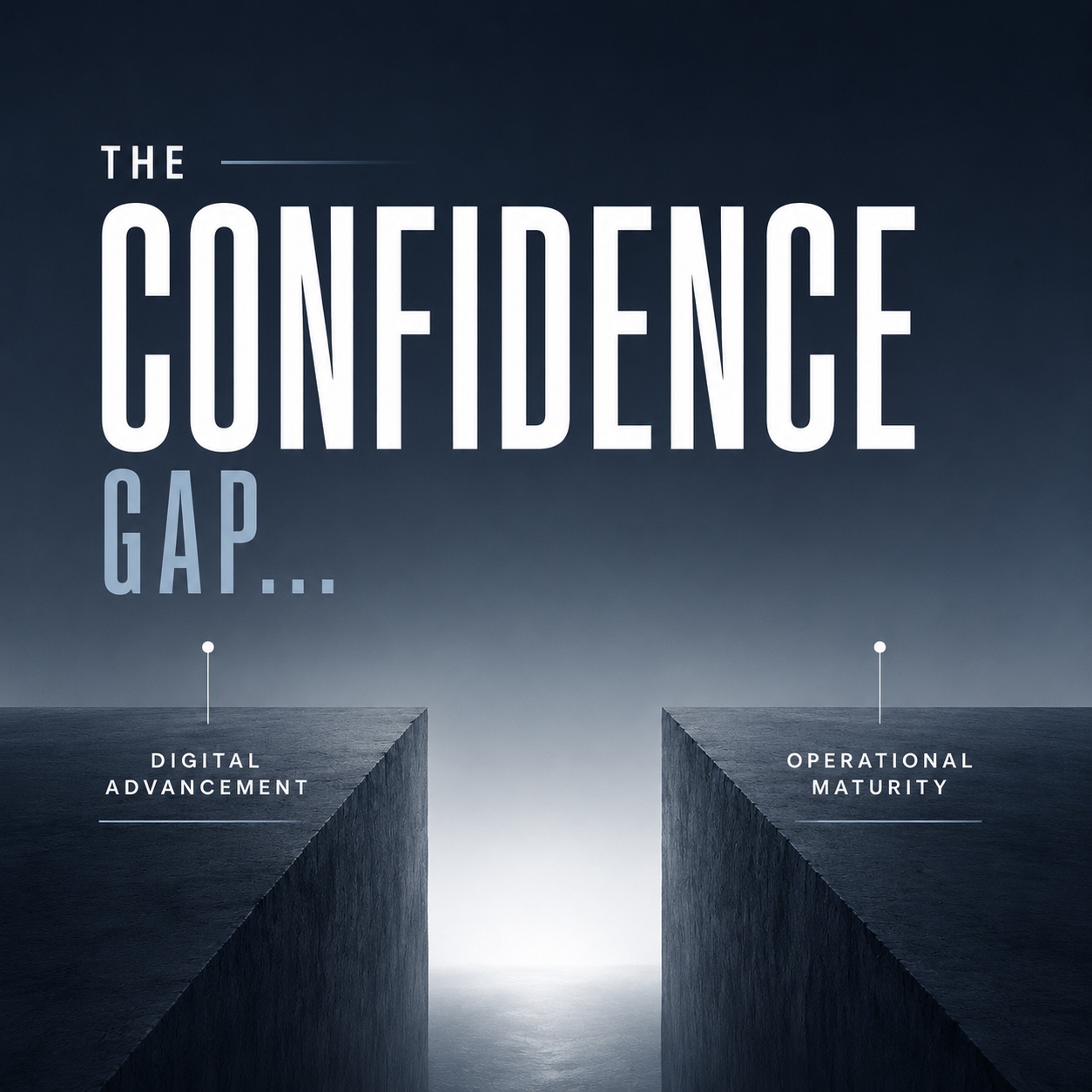
One of the more interesting realities emerging across industrial digital transformation is this:
The industry appears more digitally mature than it operationally behaves.
On the surface, industrial operations look more advanced than ever:
AI-driven analytics.
Digital twins.
Predictive maintenance.
Remote operations.
Connected infrastructure.
Real-time operational visibility.
Integrated operational technology environments.
And to be clear — real progress has absolutely been made.
Many organizations have significantly improved operational awareness, engineering visibility, integrity monitoring, and decision support capabilities over the past decade.
But beneath that progress, many companies are still navigating a more difficult operational challenge:
How do organizations operationally mature alongside the technology environments they deploy?
Because in many industrial environments, operational execution still depends heavily on:
manual workarounds,
spreadsheet reconciliation,
tribal knowledge,
field interpretation,
and human validation between enterprise systems, operational technology platforms, engineering workflows, and field operations.
That is not failure.
It is the reality of industrial transformation maturing inside complex operational environments.
Because the real measure of industrial digital transformation success may not be how advanced the technology appears. It will be how confidently operations, engineering, and field teams can respond when conditions become uncertain or operationally critical.
There is a quiet strength in this shift.