Power Generation
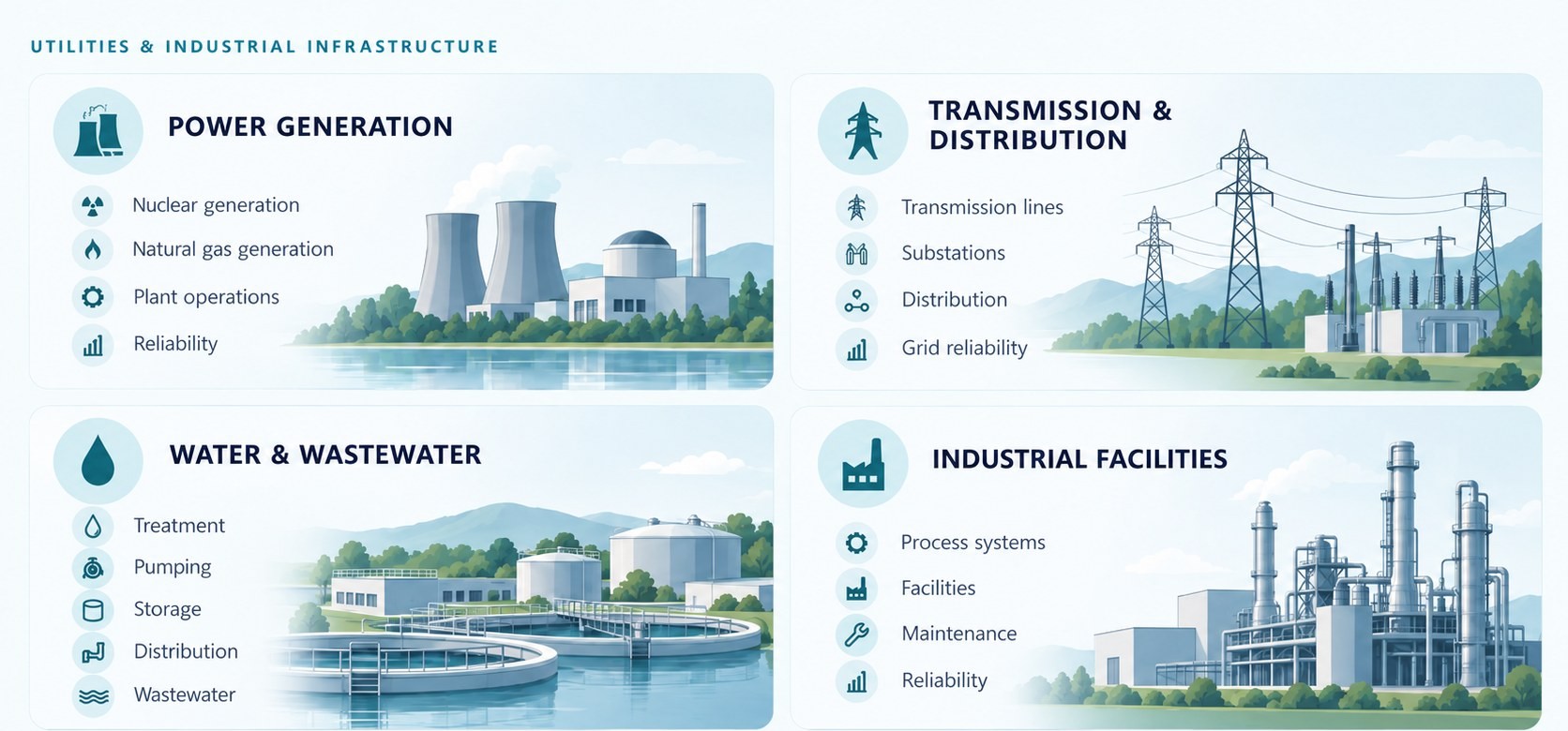
Natural gas and nuclear generation, along with the plant systems required to keep electricity available.
MARKETS
Power generation, the electric grid, water and wastewater systems, and industrial facilities support the services people and businesses depend on every day.
These environments operate differently, but each relies on physical assets, field execution, reliable information, maintenance, and investment decisions made over long asset lives.
WHAT THIS MARKET INCLUDES
Different systems, different assets, and different operating demands, but the same expectation: keep essential services available and dependable.
Natural gas and nuclear generation, along with the plant systems required to keep electricity available.
Transmission lines, substations, and distribution networks that move electricity from generation to end users.
Treatment, pumping, storage, distribution, collection, and wastewater systems that keep water moving reliably.
Process equipment, utilities, piping, electrical systems, and facilities that support continuous industrial operations.
SYSTEM OVERVIEW
These are distinct operating environments, not one value chain. What connects them is the need to understand asset condition, protect reliability, support field execution, and make sound lifecycle decisions.
CONNECTED EXPERIENCE
My experience spans the physical asset, the integrity problem, the operational data layer, and the commercial decision. That combination helps connect field conditions to the decisions organizations make about maintenance, technology, investment, and growth.