01Field Testing & Surveys
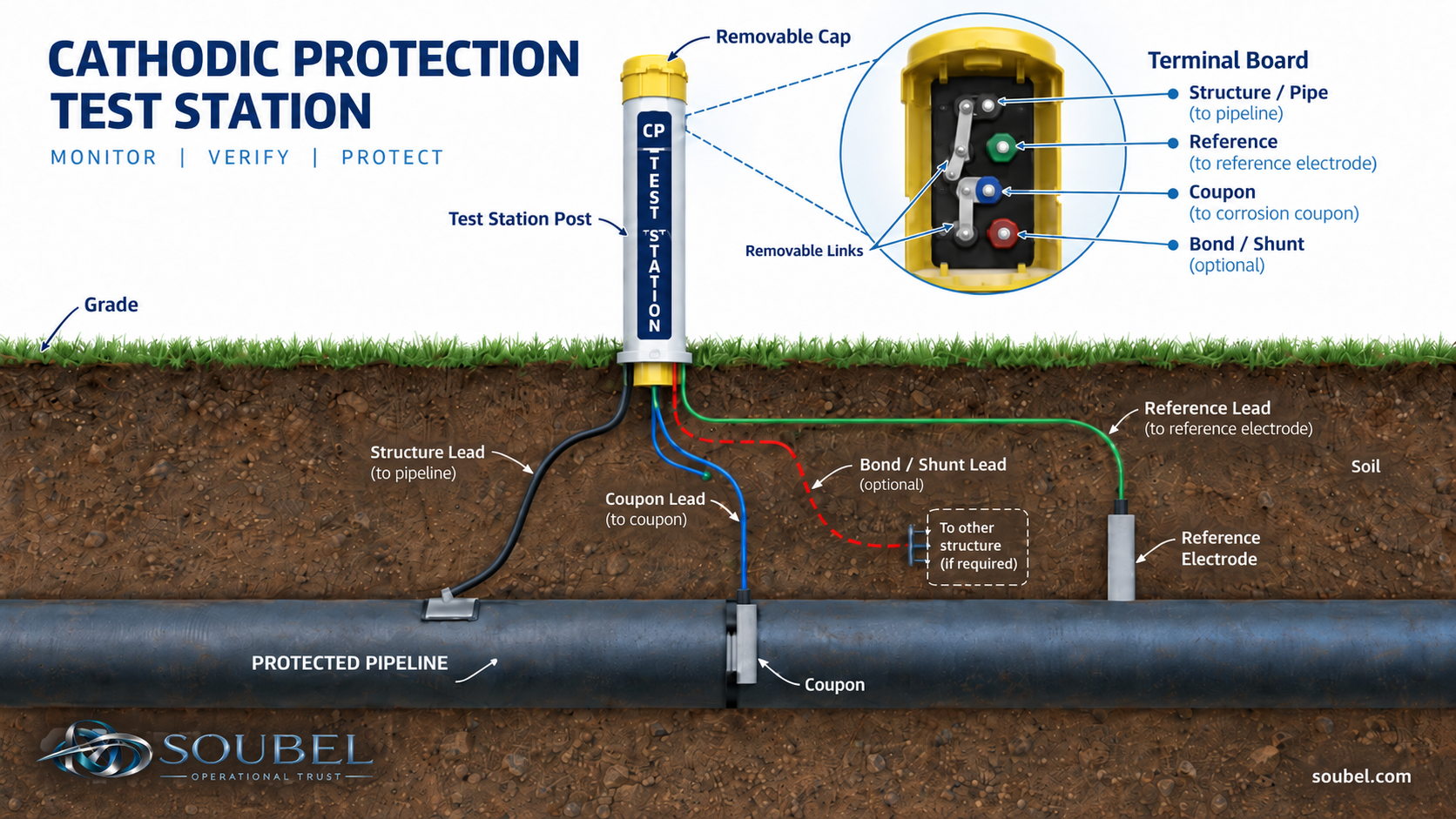
Test stations, portable reference electrodes, coupons, current measurements, and field surveys provide direct evidence at a specific place and time. Pipe-to-soil potentials, interruption testing, CIS (Close Interval Survey) and other survey methods help evaluate whether the system is providing the intended level of protection.
These measurements also give technicians context that a remote value alone may not provide: field conditions, electrode placement, continuity, interference, coating indications, and other factors that can affect interpretation.
02Sensors & Remote Monitoring
Installed sensors and remote monitoring units extend visibility between field visits by collecting configured electrical measurements at selected locations. Depending on the system, this can include rectifier voltage and current, structure-to-electrolyte potential, bond current, and other monitored conditions.
Remote data is most useful as evidence of change. Trends, excursions, loss of power, or unexpected readings can help prioritize inspection and troubleshooting, while field verification remains important when conditions require investigation or confirmation.