
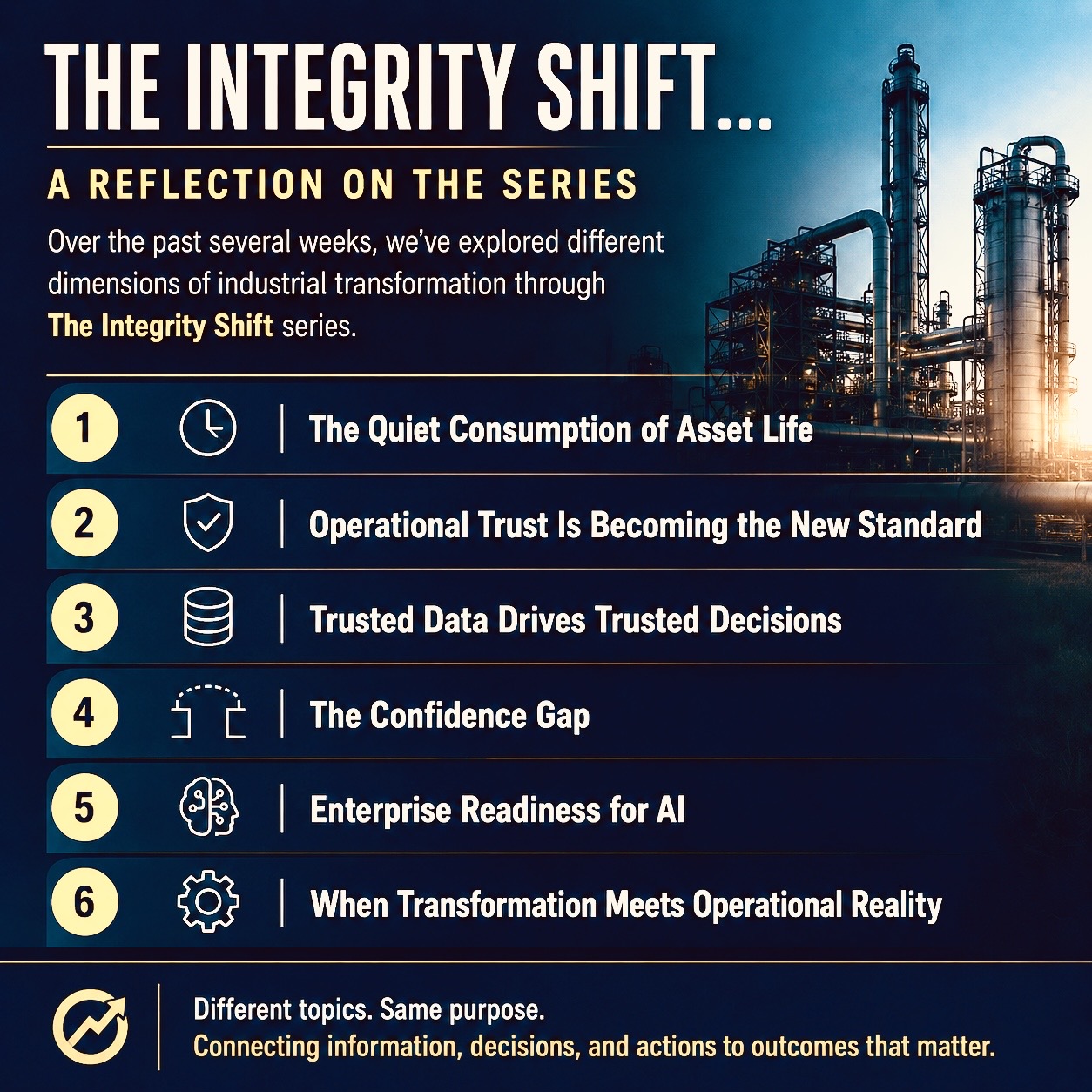
Over the past several weeks, I’ve written about:
- The Quiet Consumption of Asset Life
- Operational Trust Is Becoming the New Standard
- Trusted Data Drives Trusted Decisions
- The Confidence Gap
- Enterprise Readiness for AI
- When Transformation Meets Operational Reality
While each explored a different aspect of industrial transformation, they all seemed to lead back to the same observation:
Industrial organizations have more data, more visibility, more analytics, and more computing power than ever before.
The progress is real.
AI-driven analytics.
Digital twins.
Predictive maintenance.
Connected infrastructure.
Real-time operational visibility.
These technologies are creating capabilities that would have been difficult to imagine just a decade ago.
But as technology continues to advance, a different challenge is emerging:
How do organizations adapt their people, processes, and decisions to fully capitalize on the value these technologies create?
The questions that matter most remain remarkably human:
- Can we trust the information?
- Can we align around priorities?
- Can we confidently act when conditions become uncertain?
- Can we transform insight into measurable operational outcomes?
The Integrity Shift was never intended to be a discussion about software, AI, digital twins, or data platforms.
It is a discussion about what happens when technology meets operational reality.
In many ways, The Integrity Shift is not about digital transformation at all.
It is about ensuring that information, decisions, and actions remain connected to the outcomes organizations are pursuing—and the men and women responsible for delivering them.